Restoration of Isfahan’s Chehel Sotoun palace awaits UNESCO funding
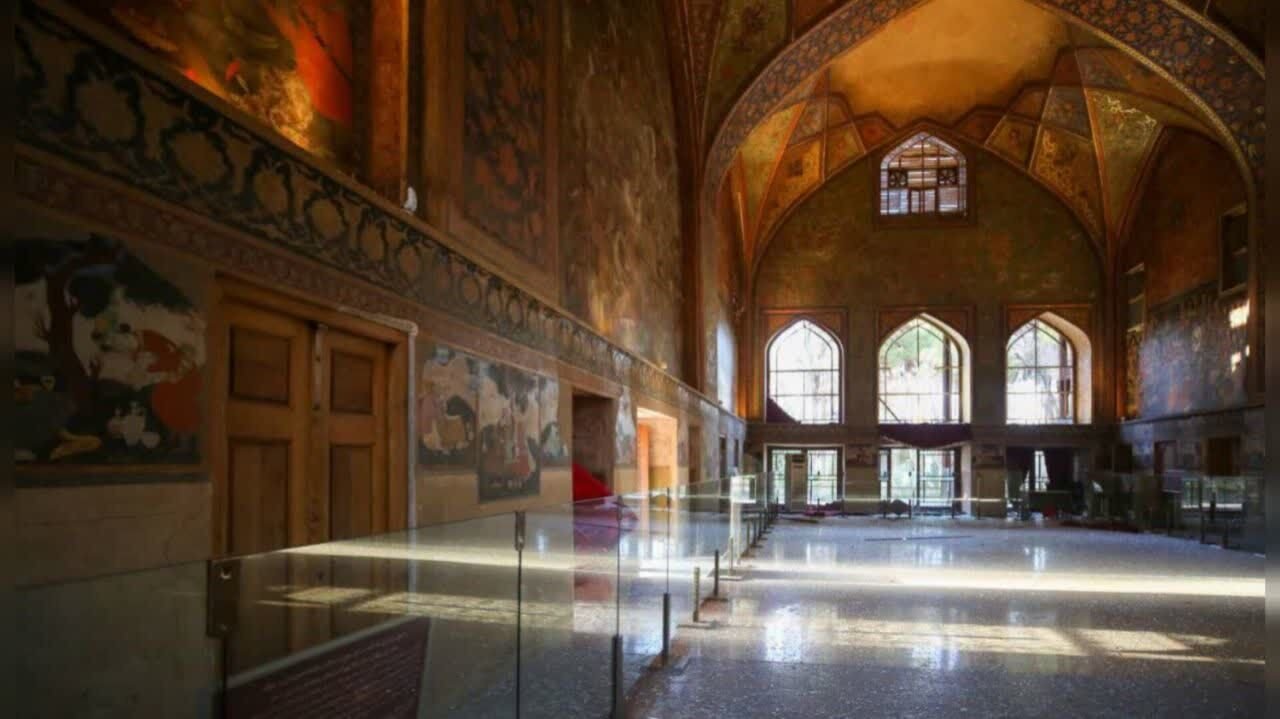
TEHRAN - Restoration of Iran’s UNESCO-listed Chehel Sotoun palace and garden is awaiting additional funding from the government and UNESCO, as experts assess structural damage to the Safavid-era monument following a 40-day war with the US and Israeli forces, the site’s director said.
Most emergency measures to prevent further deterioration have been completed, but major restoration work, including repairs to the palace’s columns, roof structures and decorative features, cannot proceed without sufficient funding, Mostafa Hadipour, director of the Chehel Sotoun World Heritage site, told IRNA news agency on Monday.
Hadipour said the estimated damage to the complex stood at about 1.5 trillion rials ($56 million), adding that funds allocated by the government and Isfahan province for restoration planning and maintenance of the garden’s approximately 67,000 square meters of green space were insufficient to cover major restoration contracts.
He called for urgent intervention by the government and UNESCO, arguing that the international organization had a responsibility to support the protection of properties inscribed on the World Heritage List, including in circumstances involving armed conflict.
“We are waiting for the allocation of funds promised by UNESCO and the government for this World Heritage site,” Hadipour said.
Without the necessary financing, he said, essential work such as scaffolding the palace’s porticos, repairing roofs, restoring muqarnas decorative elements and rebuilding wooden structures could not be undertaken.
Emergency measures have so far focused on both structural stabilization and decorative features. They include covering vulnerable sections with plastic sheeting, installing temporary supports and treating doors and equipment to help protect them through the winter. Specialists have also carried out reinforcement work on the palace’s double-roof structure.
Technical assessments have identified several columns in the palace’s portico that have shifted from their original alignment, as well as displaced structural beams. A consulting company is conducting further studies to determine the appropriate repair methods.
One option under consideration is to reinforce the affected columns with steel elements and return them to their original alignment. Another is to stabilize them through engineering measures while retaining their current positions. Hadipour said no final decision had been made.
The damage to the columns has been tentatively linked to blast waves from attacks on the Isfahan provincial governor’s office within the historic Safavid Government House complex during the 40-day war. The reported damage affected the protected surroundings of Chehel Sotoun and other historic monuments in the city.
However, the precise cause and extent of the structural deterioration have been subjects of differing assessments. Some heritage specialists have questioned whether the blasts alone could explain the columns’ condition, noting that reinforcement work was reportedly carried out on the portico columns in earlier decades. Accounts differ over which restoration specialists undertook the work and whether all the columns were reinforced with steel.
Hadipour said detailed technical studies were continuing and that the consulting company was preparing the necessary implementation plans. Large-scale restoration can begin once the plans are approved and the required funding secured.
The attacks also damaged other historic buildings in Isfahan’s Safavid Government House complex, including the Ali Qapu Palace, the Talar-e Ashraf, the Timurid Hall, the Jabeh Khaneh building, which houses the Museum of Decorative Arts, and the Rokib Khaneh building, home to the Museum of Contemporary Art, according to IRNA.
The complex forms part of Isfahan’s historic urban landscape, which includes Naqsh-e Jahan Square, a UNESCO World Heritage site. Damage was reported to monuments in the square’s protected surroundings following attacks on March 8, with further damage reported after the provincial governor’s office was bombed on March 9.
Chehel Sotoun, meaning “Forty Columns” in Persian, is one of the principal surviving monuments of Safavid Isfahan. The 17th-century pavilion was developed under Shah Abbas II for royal receptions and diplomatic gatherings. Its name refers to the reflection of its 20-columned entrance portico in the long pool in front of the building.
The palace is renowned for its historic paintings and decorative interiors, including works associated with the Safavid artistic tradition. Its surrounding garden is one of nine Iranian gardens collectively inscribed on UNESCO’s World Heritage List in 2011 as the Persian Garden, recognized for their distinctive design and influence on Persian landscape architecture.
The latest damage has heightened concerns over the conservation of Isfahan’s architectural heritage, while the delay in securing adequate funding threatens to postpone major repairs to one of the city’s most prominent historic landmarks.
AM
Leave a Comment